
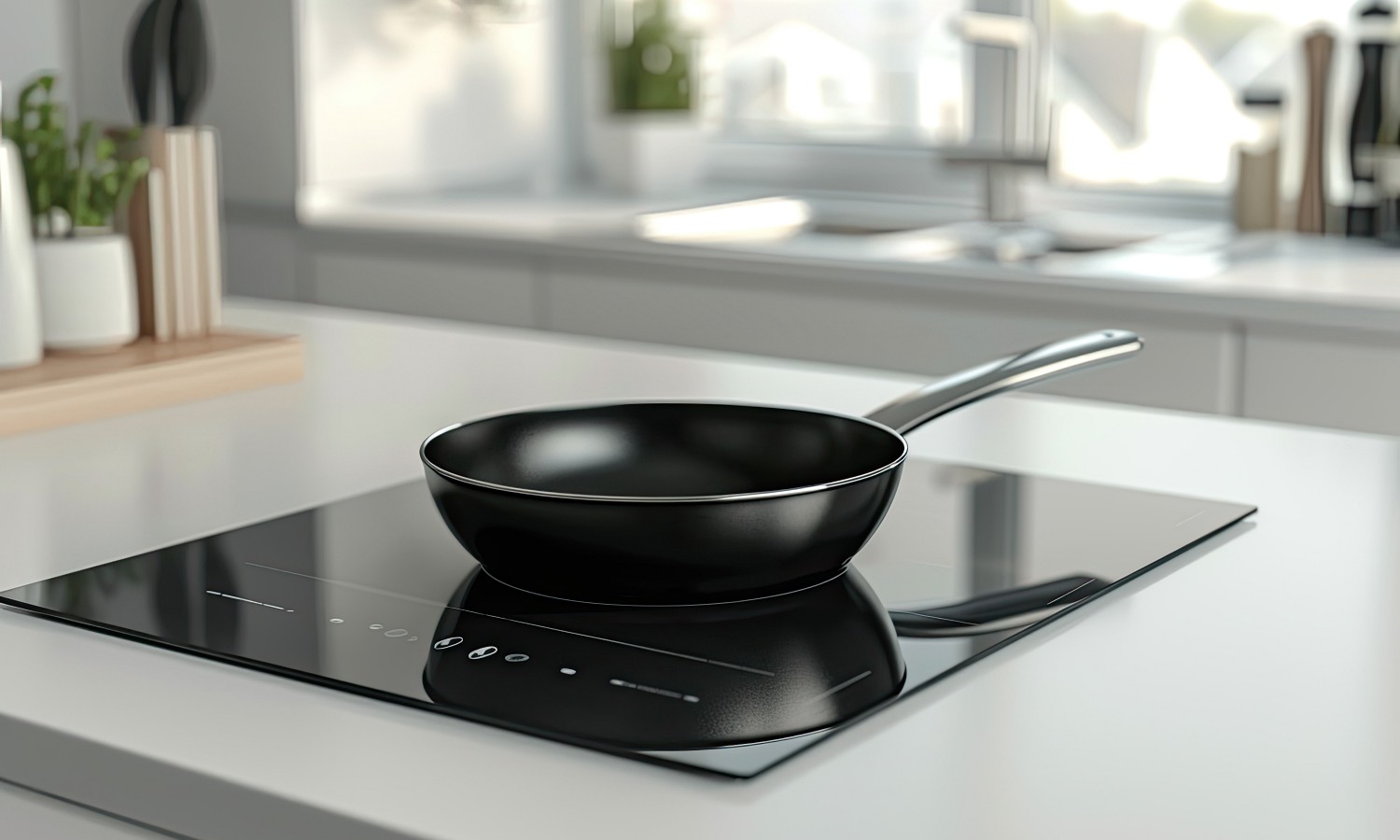
Author: Yingjun Kitchenware Ni-Kovic Kitchen Equipment | Special Feature on Selecting Commercial Kitchen Equipment | Last Updated: July 2026
You've decided to introduceCommercial Induction Cooktop, but when faced with a long list of power ratings—such as 3,500W, 5,000W, 6,000W, 8,000W, and even 16,000W—not to mention the differences between “flat” and “concave (wok)” models, as well as “220V single-phase” and “380V three-phase”—do you feel at a loss as to where to begin?
The consequences of choosing the wrong power setting are very real: if the power is too low, the wok lacks the power for stir-frying and dishes take longer to prepare; if the power is too high, not only does it unnecessarily drive upElectrical Work and Electricity Meter Installation Costs...and there’s more than enough for everyday use. This article was written by a company with deep roots in Hong Kong’s foodservice equipment industry,Yingjun Kitchenware (Ni-Kovic)This summary covers everything from the relationship between power and cooking performance, single-burner versus multi-burner configurations, flat versus concave surfaces, and 220V/380V power requirements, to recommended power settings for different dishes, and concludes with a chart.Quick Reference Chart for Model Selection...so you can get a clear understanding right away while you're choosing specifications.
This article guide
- I. The Relationship Between Power and Heat Output: What Does "Watts" Mean?
- II. Analysis of the Three Major Power Levels: 3,500W / 5,000W / 8,000W
- III. Flat Induction Cooktop vs. Concave (Wok) Induction Cooktop
- IV. How Do You Choose Between Single-Head, Single-Head-Single-Tail, and Multi-Head Configurations?
- V. 220V Single-Phase vs. 380V Three-Phase Power Requirements
- VI. Important Considerations for Electricity Applications and Electricity Meters for Restaurants in Hong Kong
- VII. Recommended Power Settings for Different Dishes and Scenarios
- VIII. Quick Reference Table for Selecting the Power Rating of Commercial Induction Cooktops
- IX. Five Pre-Purchase Checklists
- Frequently Asked Questions (FAQ)
I. The Relationship Between Power and Heat Output: What Does "Watts" Mean?
The "W (watts)" on a commercial induction cooktop refers toMaximum Input Power, Simply put, this refers to how much heating energy a stove can output when operating at full power. The higher the wattage, the more heat can be transferred to the cookware per unit of time, resulting in naturally stronger heat and faster heating. This is precisely why it has replaced open flames—while the heat output of a gas stove is judged by eye, an induction cooktop quantifies it with precise wattage and settings.
However,Higher wattage isn't necessarily better. What truly determines whether a product is “easy to use” is how well the wattage matches the cooking method, cookware, and power supply. Take a soup pot used in a beverage shop as an example: a 3,500-watt induction cooktop can heat a 5-liter soup pot in about 9 to 10 minutes; however, for high-heat stir-frying in a restaurant, an 8,000-watt model is required to achieve the ideal wok hei.
In addition, high-quality commercial induction cooktops often useFrequency Conversion and Half-Bridge Technology...capable of “low-power continuous heating”—that is, maintaining a stable, uninterrupted heat output during slow cooking over low heat, while also being able to instantly reach full power for high-heat stir-frying. This linearity of heat output is a quality indicator worth paying more attention to when selecting a model than simply looking at the maximum wattage. To compare the heat performance of different models, you can first browse Yingjun’sCommercial Induction Cooktop Series。
II. Analysis of the Three Major Power Levels: 3,500W / 5,000W / 8,000W
2.1 3500W: Entry-Level Countertop Model
3,500W is the most common entry-level power rating for commercial induction cooktops. Most models feature a countertop design, with a compact, portable body that takes up minimal counter space. They typically operate on 220V single-phase power, making them easy to install andBeverage shops, casual dining restaurants, hot pot restaurants, and small coffee shopsA favorite among users. It’s more than sufficient for making soup, pan-frying, slow cooking, and stir-frying regular portions—it strikes the perfect balance between affordability and performance.
2.2 5,000W: The Backbone of Medium-Volume Service
5,000 W falls into the medium-to-high power range and is also commonly found in 220 V single-phase countertop recessed or flat-top ovens. It delivers significantly more heat than a 3,500 W model and is suitable forRestaurants with moderate volume that require quick stir-frying, such as stir-fry stations at Chinese stir-fry restaurants or Hong Kong-style cafes. If your kitchen requires both stir-frying and soup-making, a 5,000W model is a practical choice that balances cooking power and electricity costs.
2.3 8,000 W and Above: High-Heat Stir-Fry and Freestanding Models
8,000 W is the standard power rating for commercial wok ranges, most of which areFloor-standing (freestanding) design, and offers a choice of 220V single-phase or 380V three-phase power supply. This class is specifically designed for high-heat stir-frying in restaurants and large dining establishments, producing a wok aroma that closely resembles that of an open flame. If configured with a dual-head, single-tail model, the total power output can reach up to 16,000W, requiring three-phase power.
|
Power Class |
Common Designs |
Voltage |
Typical Scenarios |
|
3,500 W |
Countertop Flat/Recessed Stoves |
220 V, single-phase |
Beverage Shops, Casual Dining Restaurants, Hot Pot Restaurants, Soup Shops |
|
5,000 W |
Benchtop Induction/Electric Stove |
220 V, single-phase |
Cooking Positions at Small Stir-Fry Restaurants and Hong Kong-Style Cafes |
|
6,000 W |
Countertop/Freestanding Recessed Stove |
220V single-phase / 380V three-phase |
Medium-Capacity Stir-Fry, Multi-Purpose Kitchen |
|
8,000 W |
Single-Ended / Single-Ended, Single-Tail |
220V single-phase / 380V three-phase |
High-Heat Stir-Fry at a Chinese Restaurant |
|
16,000 W |
Ground-Based Double-Headed, Single-Tailed |
380V, three-phase |
Large restaurants often have multiple stoves operating at the same time |
III. Flat Induction Cooktop vs. Concave (Wok) Induction Cooktop
In addition to power,Hob ShapeThis is another key factor that directly affects cooking power and the quality of the dishes. Commercial induction cooktops are mainly divided into two categories: flat-top and concave (wok).
3.1 Concave (Wok) Induction Cooktop: The Top Choice for Chinese Stir-Frying
The heating coil plate on a concave induction cooktop features a recessed (V-shaped) design, with coils that are larger than those on a flat cooktop, allowing it to better accommodate round-bottomed woks so that the bottom of the pot fits more snugly against the cooktop surface,Maximizing the Heat Transfer Area...simulating the effect of a traditional gas stove where the flame surrounds the pot. Actual tests show that the thermal efficiency of a concave burner for round-bottomed pots can reach approximately 92%, which is about 5%–8% higher than that of a flat burner, making them better suited for Chinese cooking that requires high-temperature stir-frying and emphasizes the “wok hei” (wok aroma), while also reducing the likelihood of food sticking to the bottom of the pan.
3.2 Flat-Top Induction Cooktop: Even Heating and Versatility
The flat induction cooktop features a flat coil layout that ensures even heat distribution and is compatible with most flat-bottomed cookware,Effortless cleaning, highly versatile. It is better suited for cooking methods that require even heat distribution, such as pan-searing steak, slow cooking, and simmering soups. The downside is that heat tends to disperse more during stir-frying, so it may not produce the same “wok hei” as a concave wok; additionally, there may be a temperature difference of about 20°C between the center and the edges of a flat wok.
3.3 How Should You Choose?
- Wok Chef Position:If your cooking primarily involves Chinese-style stir-frying, tossing ingredients in the wok, and utilizing the wok's "wok hei" → Choose a concave (wok-style) induction cooktop and pair it with a round-bottomed wok.
- Multi-purpose positions:If your cooking primarily involves pan-frying, boiling, braising, making soups, or preparing Western or Japanese dishes → Choose a flat-top induction cooktop for greater versatility.
- Recommended cookware:Please note that concave stoves require round-bottomed or specially designed concave pots; ordinary flat-bottomed pans will not fit properly, resulting in a significant decrease in heating efficiency.
Yingjun’s commercial induction wok range features a concave wok design and can be configured with a single-head, single-tail layout (wok in front, soup pot in back), making it versatile for use in Chinese kitchens. For more details, please refer toCommercial Induction Wok Range Series。
IV. How Do You Choose Between Single-Head, Single-Head-Single-Tail, and Multi-Head Configurations?
Aside from power,Burner ConfigurationThe number of tasks a unit can handle simultaneously directly affects the kitchen’s serving efficiency and countertop utilization.
4.1 Single-burner Induction Cooktop
The most basic configuration—one unit per stove—is suitable for workstations with limited space or those involving a single cooking process, such as stations dedicated to making soup or stir-frying a single dish. Countertop single-burner induction cooktops fall into this category; they are flexible and easy to position.
4.2 Single-Burner, Single-Exhaust Electromagnetic Wok Stove
This is the ideal setup for a Chinese-style kitchen:Front: Main Wok + Back: Low Soup Burner. While the chef is stir-frying in the wok, the back burners can keep the broth warm and blanch ingredients, allowing the process to flow seamlessly and significantly speeding up service.
4.3 Bull-Style and Floor-Style
Floor-standing four-burner induction cooktops or two-front-burner, single-rear-burner models are suitable for restaurants and cafeterias that handle large volumes of food and require multiple burners to operate simultaneously. The total power output of these models often exceeds 10,000 watts,Must be used with three-phase power. When selecting steaming and refrigeration equipment, it is recommended to plan them together; you may refer to Yingjun’sSteaming and Boiling Equipment與Commercial Refrigerator Series。
V. 220V Single-Phase vs. 380V Three-Phase Power Requirements
This is the step in the selection process that is most easily overlooked, yet most likely to result in a situation where “the unit arrives but can’t be used.” The higher the power rating of a commercial induction cooktop, the greater its power supply requirements.
5.1 220V Single-Phase Power
Most countertop induction cooktops with power ratings between 3,500 W and 6,000 W operate on 220 V single-phase power, which is close to the standard power supply in most commercial establishments, making installation relatively straightforward. However, it is important to note that operating multiple high-power single-phase appliances simultaneously may still exceed the store’s total electrical load and cause the circuit breaker to trip.
5.2 380V Three-Phase Power
Stoves with a power rating of 8,000 W or higher—especially freestanding models and large multi-burner wok stoves—generally require380V three-phase AC power; Some imported models even require 400V three-phase power. Three-phase power can reliably support high-power equipment and prevent current overloads. The 220V power supply typically found in residential homes or basic retail stores is generally unable to support these devices directly; a professional electrician must be consulted to assess the site and make the necessary modifications.
5.3 Why Is Three-Phase Power So Essential for Restaurants?
In addition to stoves, restaurants have a large number of electrical appliances, such as refrigerators, air conditioners, exhaust fans, lights, and illuminated signboards. The industry generally emphasizesThe most important thing for restaurants and eateries is three-phase power....Because three-phase power offers high capacity and evenly distributes the load, it can support multiple high-power devices simultaneously without tripping the circuit breaker. If a stall has only single-phase power, the power supply issue must be resolved before installing a high-power induction wok.
|
Project |
220V single-phase power |
380V three-phase power |
|
Rated Power |
Approximately 3,500 W–6,000 W |
8,000 W or higher, multi-head models |
|
Power Supply Stability |
Generally, it is susceptible to the effects of multiple machines running simultaneously. |
High, even load distribution |
|
Installation Requirements |
Lower |
Requires an application or modification; the cost is relatively high. |
|
Common Scenarios |
Beverage shops, stir-fry restaurants, and Hong Kong-style cafes |
Restaurants, large dining establishments, cafeterias |
VI. Important Considerations for Electricity Applications and Electricity Meters for Restaurants in Hong Kong
In Hong Kong, if a store’s existing electrical supply is insufficient to support high-power electromagnetic equipment, an application must be submitted to the power company (CLP Power or Hong Kong Electric).Upgrade the electric meter or switch to three-phase power. This typically involves the following steps and considerations:
- Calculate total electricity consumption:First, a licensed electrical engineer will calculate the total electricity consumption for the entire store, including stoves, refrigerators, air conditioners, lighting, and signage.
- Confirm the power supply configuration:Confirm whether the storefront already has three-phase power, or if the utility company needs to run new lines and make modifications.
- Application Timeline and Fees:Applying to upgrade your electric meter or switch to three-phase power can take anywhere from several weeks to several months and involves costs, so you should factor this into your renovation schedule.
- Professional Installation:High-power induction cooktops must be installed by a licensed electrician to ensure that the wire gauge, circuit breaker, and grounding meet specifications.
We recommend that, once the list of kitchen equipment has been finalized, you initiate the electricity application as soon as possible to avoid a situation where the equipment arrives but cannot be put into operation due to insufficient power supply. Yingjun atKitchen Layout DesignAt this stage, we will help assess the compatibility between the electrical system and the equipment to minimize such risks.
VII. Recommended Power Settings for Different Dishes and Scenarios
Below are practical recommendations for matching power ratings with stove types based on common types of food service establishments, to help you find the right fit.
7.1 Beverage Shops, Coffee Shops, and Light Meal Restaurants
Since it’s mainly used for boiling water, preparing soup bases, and light frying, a 3,500-watt flat-top cooktop is sufficient. It operates on 220V single-phase power, is easy to install, and is portable.
7.2 Hot Pot Restaurants
Each table is equipped with a single stove, which maintains heat over a long period at a low, gentle flame, emphasizing the stability of “low-power continuous heating.” The 3,500-watt flat-top stove is the most common type; be sure to consider the total power load when multiple stoves are operating simultaneously.
7.3 Hong Kong-Style Cafes and Stir-Fry Restaurants
Since you’ll be both stir-frying and simmering, we recommend pairing a 5,000W concave stir-fry burner with a soup burner, or using a single-head, single-tail configuration to balance cooking power and electricity costs.
7.4 Chinese Restaurants and Large Dining Establishments
Designed for high-heat wok cooking, the 8,000W freestanding concave-bottom wok range is the main unit, available in single-burner/single-exhaust or dual-burner/single-exhaust configurations, and requires a 380V three-phase power supply.
7.5 Specialized Position in Steaming and Soups
Soup stations, stewing stations, and steaming stations can be separated from the wok station. By using low-profile induction soup stoves and electric steam cabinets, the electrical load on any single station is reduced, and overall serving efficiency is improved.
VIII. Quick Reference Table for Selecting the Power Rating of Commercial Induction Cooktops
|
Type of Restaurant |
Recommended Power |
Stove Top |
Configuration |
Voltage |
|
Beverage/Light Meal Shop |
3,500 W |
Plane |
Single-head worktop |
220 V, single-phase |
|
Hot Pot Restaurant |
3,500 W |
Plane |
Single-head worktop |
220 V, single-phase |
|
Tea House / Stir-Fry Restaurant |
5,000 W |
Concave |
Single-ended / Single-ended, Single-tailed |
220 V, single-phase |
|
Stir-fry over medium heat |
6,000 W |
Concave |
Single-head / Floor-standing |
220 V/380 V |
|
Restaurant Stir-Fry |
8,000 W |
Concave |
Single-Ended, Single-Tail |
380V, three-phase |
|
Large Cafeteria |
16,000 W |
Concave |
Ground-Based Double-Headed, Single-Tailed |
380V, three-phase |
|
Soup Specialist Position |
3,500–5,000 W |
Plane |
Low-profile stove |
220 V, single-phase |
*The above are general recommendations; the actual selection should be based on a comprehensive assessment of serving volume, menu items, and the electrical capacity of the location.
IX. Five Pre-Purchase Checklists
- Calculation Requirements:First, estimate the daily volume of meals served and the number of stoves in use during peak hours, then determine the total power requirement.
- Check the power supply:Confirm whether the storefront has single-phase or three-phase power and whether the main meter has sufficient capacity; if necessary, apply for an increase in power capacity in advance.
- Corresponding burner surface:The stir-fry station is equipped with a concave wok, while the multipurpose station is equipped with a flat wok; the corresponding cookware is also provided.
- Check the quality:Pay attention to inverter/half-bridge technology, heat dissipation design, and warranty periods; do not confuse commercial units with residential units.
- After the Resale:Choose a supplier that offers on-site installation, maintenance, and repair services to minimize the risk of downtime.
Frequently Asked Questions (FAQ)
Q1. When it comes to commercial induction cooktops, is a higher wattage always better?
That’s not the case. The wattage should be matched to the cooking method, cookware, and power supply. For a beverage shop, 3,500 W is sufficient; only a restaurant that does high-heat stir-frying needs 8,000 W. Excessive power capacity will only unnecessarily drive up the costs of electrical work and meter installation, and you won’t be able to use all of it on a daily basis.
Q2. What types of restaurants are the 3,500W, 5,000W, and 8,000W models suitable for, respectively?
3500W is suitable for beverage shops, hot pot restaurants, and casual dining establishments; 5000W is suitable for stir-frying stations at Hong Kong-style cafes and stir-fry restaurants; 8000W and above are typically large floor-standing stir-fry ranges, suitable for high-heat stir-frying in Chinese restaurants and large dining establishments.
Q3. Which is better: a flat-top grill or a wok grill?
It depends on the intended use. Concave-bottom stoves have a large heating surface area and a thermal efficiency of approximately 92%. They simulate the effect of a pot over an open flame and are suitable for Chinese-style stir-frying. Flat-top stoves provide even heating, are highly versatile, and are easy to clean; they are suitable for pan-frying, boiling, and braising. Concave-bottom stoves require round-bottomed or specialized concave-bottom pots.
Q4. My shop only has 220V single-phase power. Can I use an 8,000W wok stove?
Most floor-standing wok ranges with a power rating of 8,000 W or higher require 380 V three-phase power. If your storefront only has single-phase power, you’ll need to apply to the power company to upgrade your meter or switch to three-phase power, and have a licensed electrician assess and perform the modifications. It’s advisable to plan this well in advance.
Q5. Can I install a high-power induction cooktop myself?
Not recommended. High-power commercial induction cooktops must be installed by a licensed electrical contractor to ensure that the wire gauge, circuit breakers, and grounding meet specifications, thereby ensuring safe and stable operation.
About Ni-Kovic Kitchenware
盈峻廚具始於 2013 年,專注為香港餐飲業(F&B)提供Commercial Induction Cooktops, Commercial Induction Woks, Commercial Electric Steam Cabinets, Commercial Electric Steamers, Commercial Refrigerators, and Commercial Electric Heating Equipment...and offers one-stop services including kitchen layout design, electrical and ventilation planning, equipment selection, and installation. If you need equipment tailored to your food output and the electrical capacity of your location, please feel free toContact Our Team of Experts, or visitYingjun Kitchenware Official Website。
*The power, voltage, and thermal efficiency data in this article are compiled from publicly available industry specifications and actual test results. Actual requirements may vary depending on the type of dish, serving volume, cookware, and electrical capacity of the cooking station; this information is provided for model selection purposes only.
X. The Relationship Between Power, Electricity Costs, and Thermal Efficiency: The Truth About Saving Money
Many business owners worry: Does higher power consumption mean higher electricity bills? The answer depends on two factors. First,Watts refer to "maximum output," not "continuous consumption."—When stir-frying on high heat, the appliance operates at full power, but when simmering over low heat, it uses only a fraction of that power. Actual power consumption depends on the cooking time and heat setting, not the maximum wattage listed on the appliance.
Second, commercial induction cooktops have a thermal efficiency of approximately 85%–92%, far exceeding the 40%–60% of gas stoves. This means that for the same dish, induction cooktops waste much less energy and cook much faster,Overall energy costs are actually lower. Therefore, choosing a model with sufficient power and high efficiency is more cost-effective than deliberately opting for a lower wattage, because insufficient heat will prolong cooking time, which actually consumes more electricity and slows down service.
Practical Recommendations:Choosing the right power setting for each task—ensuring every stove operates efficiently at the appropriate level—is the true path to energy conservation. Setting the power too high or too low leads to waste: setting it too high wastes energy on electrical infrastructure and idle capacity, while setting it too low wastes time and results in prolonged energy consumption.
XI. Common Consequences of Choosing the Wrong Power Rating and Real-Life Scenarios
11.1 Power Rating Too Low
- If the stir-frying lacks vigor and the wok hei is insufficient, the texture of the finished dish suffers—this is particularly noticeable in Chinese stir-frying.
- Slow service during peak hours and a lower table turnover rate indirectly affect revenue.
- In an effort to catch up on production capacity, the equipment was operated at high temperatures for extended periods, accelerating its wear and tear.
11.2 Selecting a Power Rating That Is Too High
- Being forced to apply for three-phase power or upgrade the electricity meter has led to a significant increase in upfront construction costs.
- Since they don't operate at full capacity on a daily basis, production capacity remains idle and the return on investment declines.
- It takes up more countertop or floor space, making Hong Kong’s already cramped kitchens even more cramped.
11.3 Ignoring Power Infrastructure
The most common—and most costly—mistake is focusing solely on comparing stove specifications while neglecting to check the electrical capacity of the installation site. As a result, after purchasing the equipment, business owners discover that the power supply is insufficient and circuit breakers keep tripping, forcing them to apply for a temporary power upgrade and delaying their grand opening.The correct procedure is: First, determine the equipment list → Calculate total electricity consumption → Apply for the necessary power supply at the same time → Have it professionally installed, All four steps are essential.
XII. Tips for Daily Maintenance and Extending the Lifespan of Commercial Induction Cooktops
- Cleaning the Stove Top:After closing each day, wait for the cooktop surface to cool, then clean the flat and recessed areas with a soft cloth to prevent grease buildup from affecting heat dissipation.
- Ensure Proper Heat Dissipation:Regularly inspect the cooling fan and air intake and exhaust vents to ensure proper ventilation and prevent dust buildup; poor heat dissipation is one of the main causes of reduced service life.
- Choosing the Right Cookware:Use cookware with a flat bottom, good magnetic properties, and the correct size; pair a concave cooktop with a round-bottomed wok to prevent reduced heating efficiency or damage to the cooktop surface.
- Distributed Load:Avoid turning on multiple high-power devices simultaneously on the same circuit to prevent circuit breakers from tripping due to overload.
- Regular Maintenance:Have the wiring and circuit breakers inspected regularly by a professional to ensure long-term safe operation.
By following the maintenance tips above, you can significantly extend the stability and service life of your commercial induction cooktop, resulting in lower costs over the long term—which is a major advantage over gas stoves. If you need maintenance or repair support, you can contact us viaContact USArrangements.
XIII. Practical Planning for the Transition from Gas to High-Power Induction Cooktops
Many restaurants in Hong Kong are gradually switching from traditional gas kitchens to induction equipment. If planned properly, this transition can be completed with zero downtime and a seamless switch. Below are the practical steps recommended by Yingjun.
13.1 Step 1: Review Positions and Menus
First, break down the kitchen into different stations—stir-frying, soups, steaming and boiling, pan-frying and deep-frying, and holding—and, using the menu as a reference, calculate the peak output for each station. This step determines the power requirements and type of cooktop needed for each station and serves as the foundation for the entire planning process.
13.2 Step 2: Phased Replacement
We recommend starting with stations that have lower heat control requirements—such as steaming, boiling, soup preparation, and food holding—by switching to induction low-soup stoves and electric steam cabinets, allowing chefs to first become familiar with the logic of induction temperature control; Then, gradually transition to the stir-frying stations—which require the most precise heat control—by replacing them with large concave wok ranges. Phased replacement minimizes disruption to service and allows the team time to adapt.
13.3 Step 3: Synchronize the Power Upgrade
Before replacing high-power equipment, you must first verify the power capacity of the space. If you need to switch from single-phase to three-phase power or upgrade the electricity meter, this should be done during the renovation phase to avoid discovering insufficient power supply after the equipment has been delivered. This is also whyEquipment selection and electrical engineering must be planned simultaneously.。
13.4 Step 4: Overall Supporting Equipment
After upgrading your wok-stirring position, don’t forget the supporting roles. You can leave the steaming of dim sum, rice, and rice rolls toCommercial Electric Steaming Cabinets, Commercial Electric Steaming Baskets, and Electric Rice Noodle Steaming Ovens; Keeping food fresh relies onCommercial Refrigerator SeriesWhen work surfaces, refrigerators, and cooktops—specifically for cooking, steaming, and refrigeration—are well-coordinated, the workflow and efficiency of the entire kitchen are truly enhanced. To learn more about comprehensive commercial electric cooking equipment solutions, visit Yingjun.Official Website。
13.5 Step 5: Training and Fine-Tuning
Once the equipment is installed, arrange for the chefs to conduct on-site test runs to familiarize themselves with the heat levels and cooking times for each setting, and make fine adjustments based on actual results. After the transition period, you’ll find that the kitchen is cooler, safer, and cleaner, and that energy and maintenance costs will gradually decrease.
The above data, specifications, and figures are for reference only. Actual operational performance, heating times, and power consumption may vary depending on the operating environment, usage habits, installation conditions, and specific product models. For precise technical specifications or professional advice tailored to your kitchen layout, please feel free to contact our team directly.