
Author: Ni-Kovic Kitchen Equipment | Cooking Equipment Knowledge Series | Last Updated: July 2026
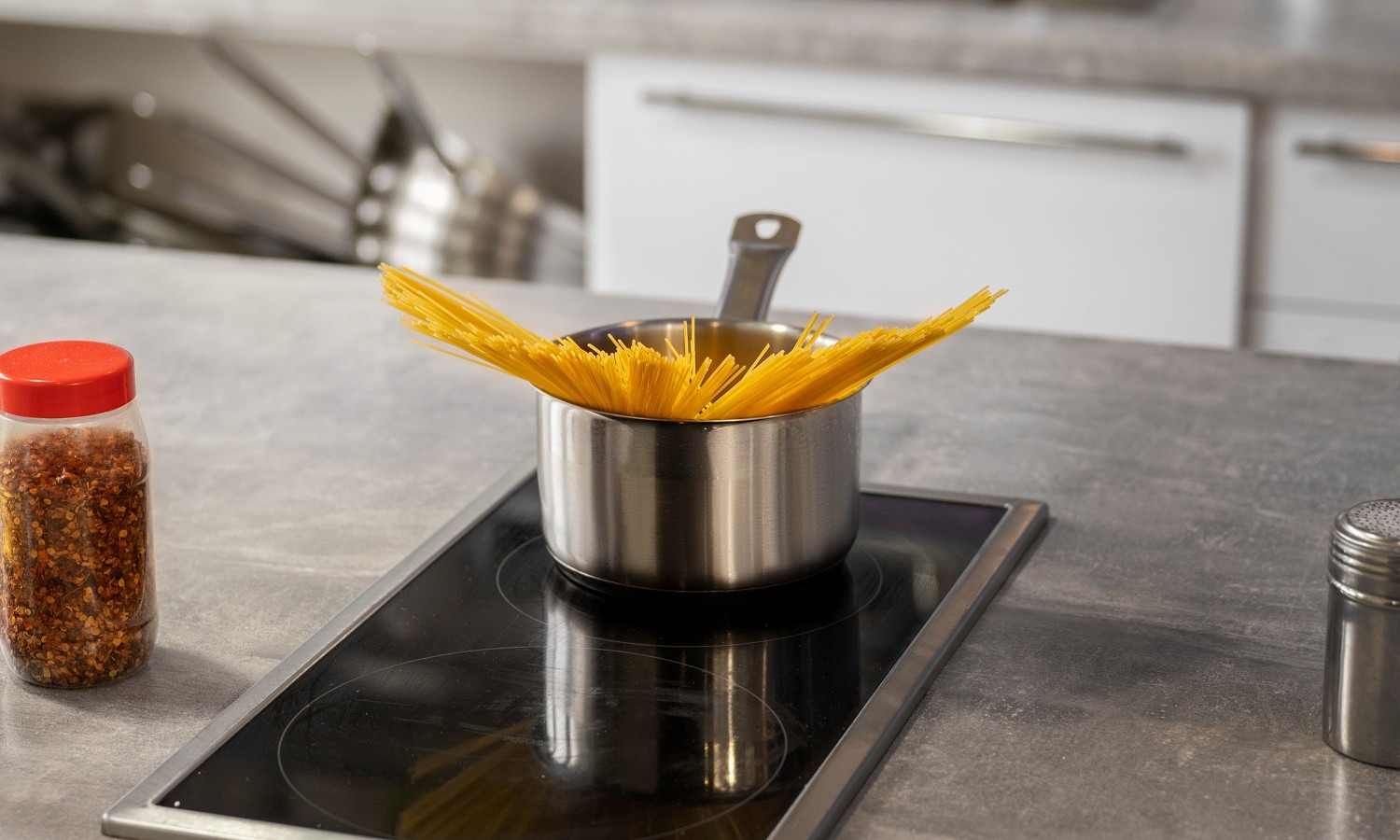
Induction CooktopWithout an open flame, how can a wok be heated until it’s red-hot and bring water to a boil in just a few seconds? The answer is “induction heating”—coils inside the induction cooktop carry alternating current to generate a constantly changing magnetic field, which induces eddy currents in the metal bottom of the pot. The heat is then generated by the pot’s own electrical resistance. The cooktop surface does not generate heat directly; the heat is generated within the cookware itself.
This article was written by a company with deep roots in Hong Kong’s foodservice equipment industry,Yingjun Kitchenware (Ni-Kovic)Compiled to help you understand everything in one article, explained in the simplest termsInduction CooktopThe principles of induction heating, requirements for cookware materials, differences between residential and commercial models, an analysis of the pros and cons, and finally, tips on how to choose the right oneCommercial Induction Cooktop。
This article guide
- I. How Induction Cooktops Work: Explained in a Nutshell
- II. A Scientific Breakdown of Electromagnetic Induction Heating
- III. Eddy Currents: The Key Factor Behind the Heating of Cookware
- IV. Variable Frequency Drives: The Key to High-Frequency AC Power
- V. Requirements for Cookware Materials: Not Just Any Pot Will Do
- VI. Practical Tips for Testing and Selecting Cookware
- VII. Differences Between Household and Commercial Induction Cooktops
- VIII. Advantages of Induction Cooktops
- IX. Disadvantages and Precautions for Induction Cooktops
- 10. Choosing the Right Commercial Induction Cooktop
- Frequently Asked Questions (FAQ)
I. How Induction Cooktops Work: Explained in a Nutshell
An induction cooktop is a type of appliance that usesInduction HeatingA device that works on the principle of rapidly converting electrical energy into thermal energy.
1.1 One-Sentence Version
An alternating current flowing through the coil inside an induction cooktop generates a varying magnetic field, which induces eddy currents in the bottom of a metal pot. These eddy currents generate heat through the pot’s electrical resistance, causing the pot to heat up directly and cook the food.
1.2 Key Feature: The cooktop surface stays cool
Unlike open flames or electric heating elements,The surface of an induction cooktop does not generate heat directly., The heat is generated by the cookware itself. This makes the cooktop relatively safe and explains why you can cook without an open flame.
1.3 A Brief History
The first household induction cooktop was introduced in Germany in 1957; production began in the United States in 1972; and by the early 1980s, it was selling well in Europe, the United States, and Japan. Today, it has become one of the mainstream cooking technologies in modern kitchens.
II. A Scientific Breakdown of Electromagnetic Induction Heating
To truly understand this, you need to break down the interaction between “electricity” and “magnetism.” Here’s how to understand it in three steps.
2.1 Step 1: Electromagnetic Effect (Electric Current Generates a Magnetic Field)
After plugging in the induction cooktop and turning it on,When an electric current flows through the coil, it generates a magnetic field that is perpendicular to the tabletop.. The phenomenon in which a magnetic field is generated by the presence of an electric current is called the “electromagnetic effect.”
2.2 Step 2: The magnetic field must change continuously
A magnetic field alone isn't enough,The most important thing is to have variety.. Therefore, the magnetic field of an induction cooktop must alternate in direction (AC); otherwise, no induced current will be generated. This is the core of the entire principle.
2.3 Step 3: Generating an Electric Current Through Electromagnetic Induction
Place the pot on the stove; the metal part of the pot is affected by the alternating magnetic field,This, in turn, induces a current—This physical phenomenon is called “electromagnetic induction” (Faraday’s law of electromagnetic induction).
2.4 Step 4: Heat Generation Due to the Thermal Effects of Electric Current
When an induced current flows through metal, the cookware’s inherent resistance generates a “thermal effect,” causing the cookware’s temperature to rise rapidly and heating the food. The transformation from electricity to magnetism, from magnetism to electricity, and from electricity to heat occurs seamlessly.
III. Eddy Currents: The Key Factor Behind the Heating of Cookware
At the heart of this entire principle, the most important element is the “eddy current.”
3.1 What Are Eddy Currents?
Eddy currents are induced by an alternating magnetic field within a metallic conductor,Induced currents circulating in concentric loops, Because of their vortex-like shape, they are called eddy currents. They were discovered in 1851 by the French physicist Léon Foucault.
3.2 The faster the magnetic field changes, the stronger the eddy currents.
The faster the magnetic field changes, the greater the induced electromotive force,The stronger the eddy currents, the more intense the heat generation.. That’s why induction cooktops use high-frequency alternating current—the frequency is high enough, and the eddy currents are strong enough.
3.3 Cold's Law
According to Lenz's law, eddy currents generate an induced magnetic field that opposes changes in magnetic flux. This characteristic is also the very nature of eddy currents. In an induction cooktop, the energy that is "opposed" in this way is converted into heat.
3.4 It is the electrons that generate heat, not the iron atoms.
Let’s clear up a common misconception: eddy currents drive the contents of the pot.Electronics, rather than iron atoms. The Joule heating effect causes the conductor to heat up, thereby providing heat.
IV. Variable Frequency Drives: The Key to High-Frequency AC Power
The "inverter" inside an induction cooktop is what causes the magnetic field to change rapidly, thereby generating strong eddy currents.
4.1 The Role of the Variable Frequency Drive
Standard household power is 50 Hz AC, which isn't high enough in frequency. The inverter is responsible for supplying power to the coil.High-frequency alternating current ranging from 20 kHz to 40 kHz, causing the metal coil to generate a corresponding high-frequency magnetic field variation.
4.2 Benefits of High-Frequency Bands
High-frequency magnetic fields change rapidly, generate strong eddy currents, and heat food quickly; moreover, since their frequency exceeds the range of human hearing (approximately 20 kHz and above), they operate relatively quietly. This is the advantage of modern inverter-type induction cooktops.
4.3 The Basics of Precise Temperature Control
Variable-frequency drives can adjust both the output frequency and power, enabling precise control over heat and temperature—this is also the technical foundation that makes it easier to control the heat on an induction cooktop than on an open flame.
V. Requirements for Cookware Materials: Not Just Any Pot Will Do
The principle behind induction cooktops dictates that—It doesn't work with just any pot.. Cookware must meet specific material requirements.
5.1 Core Requirement: Must be magnetically permeable
Induction cooktops use magnetic induction to generate heat,Only materials with magnetic permeability (ferromagnetic materials) can generate eddy current heating.. Therefore, pots and pans used on an induction cooktop must contain iron or a magnetic metal.
5.2 Two Key Metrics
- High magnetic permeability:Iron content is critical; sufficient magnetic permeability is typically required (approximately ≥100, according to IEC standards).
- Moderate resistance:If the resistance is too high, it will cause uneven heating; if it is too low, there will be significant energy loss. A moderate level is best.
5.3 Applicable Materials
- Cast-iron pot/wok:With its high iron content and strong magnetic properties, it is the top choice for traditional Chinese woks.
- 430 Stainless Steel:It contains approximately 80% of iron, is highly magnetic, and is inexpensive; it is commonly used in cookware for induction cooktops.
- Cast-iron pot:It retains heat well and has excellent magnetic conductivity, making it ideal for frying, boiling, and stewing.
- Composite-bottomed pot:Stainless steel outer layer + aluminum middle layer + magnetic steel bottom layer, combining fast heat conduction with magnetic properties.
5.4 Materials Not Suitable for Use
- Pure Aluminum/Copper Pots:It is non-magnetic, cannot detect magnetic fields, and does not generate heat.
- Glass/Ceramics:Unless a product is specifically labeled as “suitable for induction cooktops,” it cannot be used.
- Non-composite 304 stainless steel:You'll need to use a composite magnetic layer (such as an aluminum-clad base or a magnetic base) first; plain 304 stainless steel is not magnetic.
VI. Practical Tips for Testing and Selecting Cookware
6.1 Magnet Test Method
The simplest test:Hold a magnet against the bottom of the pot; if it sticks firmly, it means the pot is suitable.Induction cooktop. If it doesn't stick or won't stick at all, it's not suitable for use.
6.2 Look for the “Suitable for Induction Cooktops” label
When buying pots and pans, look for the "Suitable for Induction Cooktops / Induction" label on the bottom; for stainless steel pots in particular, make sure they have a magnetic base.
6.3 The bottom of the pot must be wide enough
We recommend that the diameter of the pot bottom be large enough to cover the induction zone (for household use, we generally recommend ≥12 cm); if it is too narrow, the induction may not work properly and heating efficiency will be poor.
6.4 A Chinese-style round-bottomed wok must be used with a concave stove
A flat-top induction cooktop is paired with a flat-bottomed pan; a Chinese-style round-bottomed wok should be paired withCommercial Induction Wok StoveIts three-dimensional, curved, concave design ensures a snug fit, even heat distribution, and smooth stir-frying.
VII. Differences Between Household and Commercial Induction Cooktops
Although they both operate on the principle of electromagnetic induction, there are significant differences between household and commercial induction cooktops.
|
Project |
Home Induction Cooktop |
Commercial Induction Cooktop |
|
Power |
Typically less than 2 kW |
Approximately 3.5–35 kW or even higher |
|
Voltage |
220 V, single-phase |
220 V or 380 V, three-phase |
|
Cooktop / Pot Type |
Mostly flat-bottomed pans |
Round-bottomed, flat-bottomed, and irregularly shaped pots are all acceptable |
|
Materials / Durability |
The cookware is relatively thin, and the components are average. |
Made with high-quality materials, it can operate continuously for 10+ years |
|
Control |
Buttons may not be convenient for chefs |
Responsive; can be operated with either the knees or hands |
|
Burnt Food |
Thin pans burn easily. |
The pot is thick and maintains temperature well, so food is less likely to burn. |
|
Use Cases |
Family |
High-traffic environments such as restaurants, banquet halls, and cafeterias |
7.1 Power and Durability: Worlds Apart
The power output of household induction cooktops is typically 2 kW or less;Commercial induction cooktops have a power output of approximately 3.5–35 kW and can operate continuously for more than 10 years (100,000 hours)., It heats up much faster than commercial diesel and propane stoves.
7.2 Pot Types and Operation Designed for Professionals
Home-use models are mostly flat-bottomed pans, and the controls aren’t always easy to reach; commercial induction cooktops, however, work with round-bottomed, flat-bottomed, and irregularly shaped pans alike. They feature responsive controls and even allow you to use both hands and your knees simultaneously—perfect for the fast-paced rhythm of a chef’s stir-frying.
7.3 More Professional Material Selection and Temperature Control
The materials and control systems used in commercial induction cooktops are completely different from those in household models. Some of the cookware is thicker than traditional pots, making it less likely to burn food quickly compared to household models, and better suited for high-intensity, continuous use.
VIII. Advantages of Induction Cooktops
- High Thermal Efficiency:Heat is generated directly within the cookware, with thermal efficiency reaching 85–90%, far surpassing that of an open flame.
- Safety:No open flame, no exhaust fumes, and low risk of fire or carbon monoxide poisoning.
- A Cool Kitchen:Since heat doesn't escape into the air, the kitchen stays cooler, which saves on air conditioning.
- Precise Temperature Control:The variable-frequency control allows for precise adjustment of heat and temperature, making it easy to control the cooking process.
- Easy to clean:The cooktop doesn't get hot to the touch, so the broth doesn't burn easily, and it wipes clean in a flash.
- Heats up quickly:Heats up quickly; ready to use right away—no preheating required.
- Environmental Protection:No exhaust emissions, compatible with green electricity, and in line with carbon reduction trends.
IX. Disadvantages and Precautions for Induction Cooktops
- Choosing Cookware:You can only use iron or magnetic stainless steel pots; aluminum, copper, glass, and ceramic are not magnetic and are not suitable.
- Requires three-phase power:High-power commercial models typically require 380V three-phase power, so power supply must be planned in advance.
- Initial Costs:The initial purchase cost of commercial induction cooktops is higher than that of open-flame stoves (but they are more cost-effective in the long run).
- Adjustment Period:Chefs accustomed to open flames will need a brief adjustment period.
- Pot Base Fit:The bottom of the pot must be in full contact with the cooktop (especially when using a round-bottomed wok on a concave surface); otherwise, the induction will be poor.
- Special Note:People with pacemakers should keep a safe distance when using this device and ensure proper heat dissipation.
Overall, most of these drawbacks can be addressed by choosing the right pot, planning your power usage in advance, and selecting high-quality commercial models.
9.1 Common Misconceptions
The most common misconception is that “induction cooktops have low heat output”—but this is actually a case of confusing residential and commercial models. Commercial induction cooktops range from 3.5 to 35 kW, offering far greater heat output than residential models and are more than capable of meeting the demands of a professional kitchen.
9.2 Safety Tips
To ensure safe use, use appropriate cookware, keep the ventilation openings on the cooktop clear, avoid leaving the appliance on without anything on it, turn off the power after use, and choose a model with over-temperature protection and automatic shut-off.
10. Choosing the Right Commercial Induction Cooktop
Now that you understand the principles, keep the following key points in mind when selecting a commercial induction cooktop.
- Depending on the purpose:Choose by position: For stir-frying, choose a concave wok stove; for blanching and boiling, choose a flat stove; for making soup, choose a low soup stove.
- Check the power:Wok stove, 5–10 kW+, 380 V three-phase—more than enough power for stir-frying.
- Let's look at the ingredients:Food-grade SUS 304 stainless steel, variable-frequency drive, and comprehensive safety protections.
- Look at the stove top:A traditional Chinese round-bottomed wok should feature a three-dimensional, curved concave base to support wok tossing.
- See After-Sales Service:We offer local custom manufacturing, installation, maintenance, and rapid repair support.
Yingjun offers a full range of commercial electric heating equipment, fromCommercial Induction Cooktops, Induction Wok Ranges到Electric Steaming Cabinets, Electric Steaming BasketsAndCommercial Refrigerators, along with kitchen layout, electrical planning, and custom fabrication services.
Frequently Asked Questions (FAQ)
Q1. How does an induction cooktop work?
Induction cooktops use electromagnetic induction for heating: A high-frequency alternating current passes through the internal coils to generate a constantly changing magnetic field, which induces eddy currents in the metal base of the cookware. These eddy currents generate heat through the resistance of the cookware. The cooktop surface itself does not generate heat directly; the heat is generated within the cookware itself.
Q2. Why can't induction cooktops be used with just any pot?
This is because only magnetic (ferromagnetic) materials can generate eddy currents and produce heat when exposed to a magnetic field. Suitable for cast iron pans, cast iron cookware, 430 stainless steel, and cookware with composite magnetic bases; pure aluminum, copper, glass, ceramic, and 304 stainless steel with non-composite bases are not magnetic and cannot be heated.
Q3. How can I quickly test whether a pot is suitable for use?
Hold a magnet against the bottom of the pot; if it sticks firmly, the pot is suitable for an induction cooktop; if it doesn’t stick firmly or doesn’t stick at all, it’s not suitable. When buying pots, also look for the “Suitable for Induction Cooktops / Induction” label on the bottom, and make sure the bottom of the pot is wide enough to cover the induction cooking zone.
Q4. What is the difference between household and commercial induction cooktops?
Household models typically have a power rating of less than 2 kW and come with multiple flat-bottomed pans; Commercial models typically have a power rating of approximately 3.5–35 kW, operate on 220 V or 380 V three-phase power, and are compatible with round-bottomed, flat-bottomed, and irregularly shaped pans. Constructed with durable materials, they can operate continuously for over 10 years, feature responsive controls and rapid heating, and are specifically designed for high-intensity professional kitchens.
Q5. Is an induction cooktop powerful enough for Chinese-style stir-frying?
Commercial induction cooktops (especially induction stir-fry cooktops) range from 5 to 10 kW or even higher, with a thermal efficiency of 85–90%. They heat up extremely quickly and offer far greater heat output than residential models. Equipped with a three-dimensional curved concave surface and a high-induction, non-stick wok, they are more than capable of handling Chinese-style stir-frying.
About Ni-Kovic Kitchenware
盈峻廚具始於 2013 年,專注為香港餐飲業(F&B)提供全方位Commercial Induction Cooktops, Commercial Induction Woks, Commercial Electric Cooking Equipment, Commercial Electric Steam Cabinets, Commercial Electric Steamers, and Commercial Refrigerators,...and offers one-stop services including kitchen layout design, electrical and ventilation planning, equipment selection, custom fabrication, and installation. Now that you’ve learned about how induction cooktops work, you might want to choose the right one for your restaurant.Commercial Induction Cooktop, WelcomeContact Our Professional Team, or browseYingjun Kitchenware Official WebsiteLearn more.
*The information in this article regarding electromagnetic induction, eddy currents, inverter frequencies, cookware materials, and differences between residential and commercial use is compiled from publicly available scientific and industry resources. It is provided solely for educational and product selection purposes; actual specifications are subject to individual products.
XI. Teardown of the Internal Structure of an Induction Cooktop
Now that you understand the principles, let’s take a look at the components inside an induction cooktop to help you better understand how it works.
11.1 Induction Coil
Typically made of copper wire wound into a coil, this is the core component that generates a magnetic field. When high-frequency alternating current is applied, it produces a constantly changing magnetic field. In commercial induction cooktops, the coil is even shaped into a three-dimensional arc that conforms to the rounded bottom of the wok.
11.2 Frequency Conversion/Power Circuits
It converts mains power into high-frequency alternating current (20–40 kHz) and controls the output power to enable multi-level heating and precise temperature control. This is the “smart” brain of the induction cooktop.
11.3 Microcrystalline Glass Panel
Cooktops are typically made of high-temperature-resistant microcrystalline glass (such as ceramic glass), which is insulating, heat-resistant, and easy to clean, while also allowing the magnetic field to penetrate to the bottom of the pot.
11.4 Temperature Sensing and Protection Devices
Built-in temperature sensors and protective circuits provide features such as over-temperature protection, dry-boil protection, and automatic power shut-off. High-quality commercial models also feature a water-and-electricity separation design for enhanced safety.
11.5 Cooling System
Power circuits generate heat during operation and require fans and heat dissipation channels to dissipate the heat. Keep the ventilation openings clear and unobstructed during use to ensure stable operation and extend the device’s lifespan.
XII. Induction Cooktops vs. Other Cooking Methods
Comparing induction cooktops with other common cooking methods helps us better understand their place in the market.
|
Method |
Principles of Heating |
Thermal Efficiency |
Kitchen Environment |
|
Induction Cooktop |
Electromagnetic induction; the cookware generates its own heat |
Approx. 85–901 TP3T |
Cool and emission-free |
|
Open-Flame Gas Stove |
Heating the bottom of the pot over a flame |
Approx. 40–551 TP3T |
Stuffy and smelly |
|
Electric Ceramic Stove / Electric Heating Element |
Resistance Heating with Conduction |
Intermediate |
Warm, with residual heat |
|
Diesel Stove |
Combustion Heating |
Low |
High temperatures, high levels of exhaust fumes |
The biggest advantage of an induction cooktop is “The cookware generates heat on its own, so no heat is wasted into the air", so it offers the highest thermal efficiency and keeps the kitchen the coolest—something that other methods relying on combustion or conduction simply can't achieve.
XIII. Commercial Applications of Induction Cooktops
Now that we understand the principles and advantages, let’s take a look at how induction cooktops are implemented in commercial settings.
13.1 Chinese-Style Kitchen
High PowerCommercial Induction Wok StoveEquipped with a concave burner and a high-power induction cooktop, it’s ideal for stir-frying, blanching, and simmering soups. With a single burner and a single burner head, this dual-purpose stove is the heart of any Chinese restaurant or banquet hall.
13.2 Steaming Station
In conjunction withCommercial Electric Steaming Cabinets vs. Electric Steaming Baskets, Uses electric heating to steam rice, dim sum, and fish; features no open flame, precise temperature control, and high output.
13.3 Western-Style and Fast-Food Kitchens
A flat-top induction cooktop paired with a flat-bottomed pan for boiling, braising, and pan-frying, along with an electric grill and deep fryer, creates a complete flameless kitchen, ideal for Western restaurants and fast-food outlets.
13.4 Open-Air and Shopping Mall Storefronts
Open-concept kitchens do not allow open flames, and many retail spaces in shopping malls do not have natural gas service. Induction cooktops produce no fumes and do not generate heat directly from the cooktop surface, making them an ideal choice for these settings.
XIV. Common Misconceptions About Buying and Using Induction Cooktops
14.1 “Do Induction Cooktops Emit Radiation That Is Harmful to Health?”
Induction cooktops use low-frequency electromagnetic fields, not ionizing radiation; they comply with safety standards when used at normal distances. People with pacemakers should keep a safe distance, but general users need not be overly concerned.
14.2 “Do Induction Cooktops Use a Lot of Electricity?”
Quite the opposite. With a thermal efficiency of 85–90%, it is far higher than that of an open flame, and requires less effective energy to cook the same meal; City University’s actual tests show that it saves nearly half the electricity compared to an open flame.
14.3 “Is the heat on an induction cooktop always low?”
You're confusing residential and commercial models. Commercial induction cooktops range from 3.5 to 35 kW, with enough power for stir-frying.
14.4 “Can I use any stainless steel pot?”
No. Non-composite 304 stainless steel is non-magnetic; you’ll need to test it with a magnet or look for the “Induction-Ready” label.
XV. Tips for Daily Maintenance and Extending the Lifespan of an Induction Cooktop
When you know how to use and maintain it properly, your induction cooktop will last longer and be safer to use.
- Cleaning the Panel:Once the cooktop has cooled, wipe it clean with a soft cloth; do not scrape the microcrystalline glass panel with sharp or hard objects.
- Ensure Proper Heat Dissipation:Make sure the fan vents aren't blocked by grease or debris, and clean them regularly.
- Avoid Dry Heating:Heating an empty pan can trigger safety mechanisms or even cause damage, so get into the habit of turning on the heat before placing the pan on the stove.
- Check the bottom of the pot:A warped or uneven hot plate can affect induction performance and efficiency; check and replace it regularly.
- Regular Maintenance:The electrical components and safety devices of commercial aircraft should be inspected regularly by qualified personnel.
With proper maintenance, a high-quality commercial induction cooktop can operate continuously for more than 10 years, making it a more cost-effective choice in the long run.
XVI. Conclusion: Understand the Principles First, Then Make the Right Choice
By the time you've read this far, you'll already understandThe core of an induction cooktop is electromagnetic induction heating.:High-frequency alternating current passes through the coil to generate a varying magnetic field, which induces eddy currents in the magnetic pot bottom. Heat is generated by the resistive heating effect of the pot, while the cooktop surface itself does not generate heat directly.
Because of this principle, cookware must be magnetic (steel, cast iron, 430 stainless steel, or a composite magnetic base)—you can check this by holding a magnet against it; The main differences between residential and commercial models lie in power output, durability, and cookware types—commercial induction cooktops range from 3.5 to 35 kW and can operate continuously for over 10 years, which is essential for professional kitchens. Induction cooktops are highly efficient, safe, run cool, and are environmentally friendly, making them the mainstream choice for modern kitchens.
Once you understand the principles, you’ll be able to make the right choice. If you’re looking to select the right commercial induction cooktop and a complete set of flameless kitchen equipment for your restaurant, please visit Yingjun’sCommercial Induction Cooktop Product Page, or contact our professional team, who will provide you with a one-stop solution—from product selection and layout to electrical planning.
The above data, specifications, and figures are for reference only. Actual operational performance, heating times, and power consumption may vary depending on the operating environment, usage habits, installation conditions, and specific product models. For precise technical specifications or professional advice tailored to your kitchen layout, please feel free to contact our team directly.